
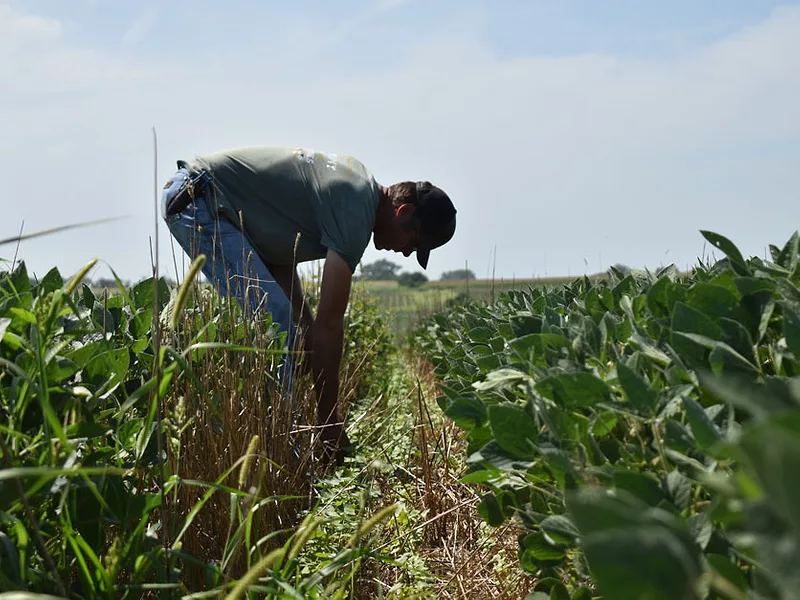
More farmers are trying out conservation tillage and cover crops, but not all of them choose to permanently adopt the practices, a new Economic Research Service report has found.
The analysis of USDA survey data found that more farmers are trying out less intensive tillage practices, with no-till usage increasing between 2012 and 2022 from 35% to 38% of surveyed acres and reduced tillage usage expanding from 28 to 35%.
Cover cropping has seen recent growth, too — but at lower rates than in the past. Between 2017 and 2022, cover-cropped acreage on surveyed acres grew by 17%, well below the 50% adoption rate seen between 2012 and 2017.
It’s easy to be “in the know” about what’s happening in Washington, D.C. Sign up for a FREE month of Agri-Pulse news! Simply click here
However, more than half of all operations recorded as planting cover crops in one census year stopped planting them by the time of the next survey. This trend was particularly noticeable in the eastern uplands region, which saw the share of cover crop usage on reporting operations drop from 10% in 2012 to 8% in 2022. The region covers West Virginia and parts of Pennsylvania, Ohio, Virginia, North Carolina, Tennessee, Georgia, Alabama, Arkansas, Oklahoma and Missouri.
While the researchers did not have direct insight into why so many operations decided to stop using cover crops, they suggested it could have been due to changes in cropping systems or expiring participation in conservation programs.
The analysis also found no-till and strip-till systems were associated with higher corn yields, though not higher soybean yields. However, they did help decrease per-acre production costs for producers of both crops, the researchers found.
For more news, go to Agri-Pulse.com.